

We’re not removing oil—we’re replacing everything it does.
This essay is the third in a series examining oil’s declining strategic role.
In the first two — The Last Oil War and Why Oil Volatility Now Accelerates Its Replacement — I explored how electrification and volatility are beginning to erode the strategic power of oil, from geopolitics to market dynamics.
This piece asks a more fundamental question.
Could we actually remove oil entirely from civilisation?
Not reduce it.
Not marginalise it.
Eliminate it….
At first glance the idea sounds absurd. Oil powers transport, aviation, plastics, chemicals, agriculture. Modern civilisation appears inseparable from it.
But history suggests otherwise.
Oil is not fundamental. Carbon and energy are.
Oil is not energy. It is stored sunlight.
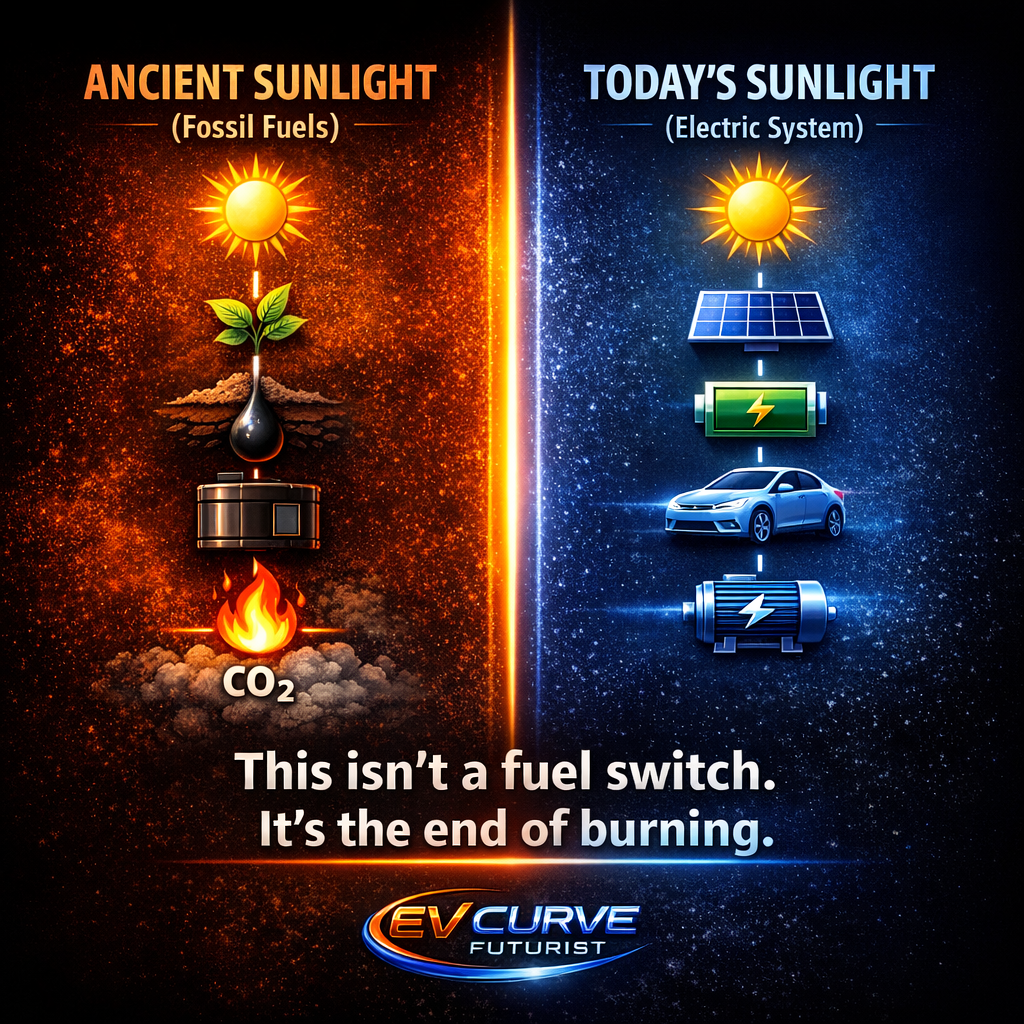
Oil performs two functions for civilisation.
- It provides energy.
- It provides carbon molecules.
Neither of those roles requires petroleum.
Before oil, civilisation still had materials
Long before petrochemicals existed we produced materials using:
• wood resins
• plant fibres
• animal fats
• natural rubber
• cellulose plastics (celluloid appeared in the 1860s)
The petrochemical age simply replaced biological carbon with fossil carbon because it was cheap and abundant.
But chemically, carbon is carbon.
Today it can come from:
• biomass
• recycled plastics
• captured CO₂
• fermentation chemistry
Oil is just one carbon source among many.
Oil’s real dominance came from transport
Most people misunderstand what oil is actually used for.
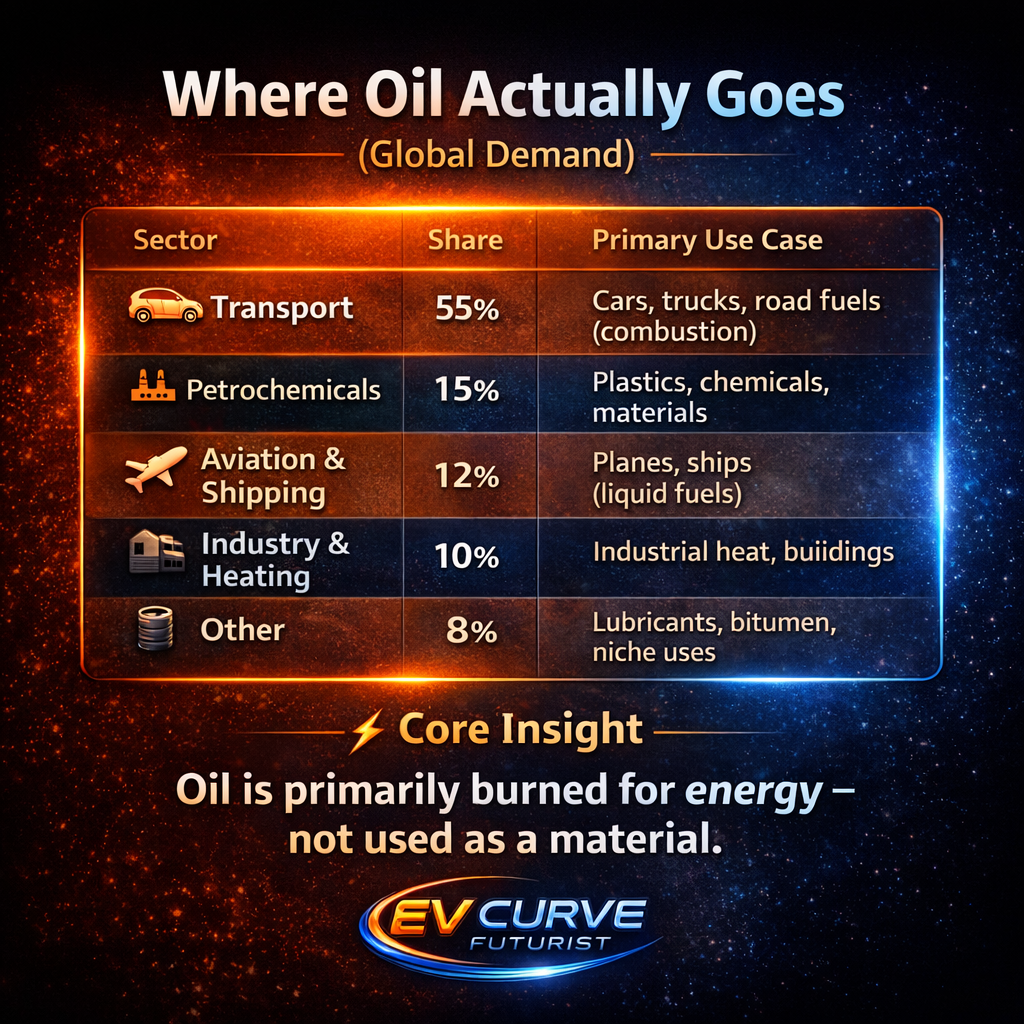
The reason oil conquered the 20th century was not plastics. It was mobility. Liquid hydrocarbons allowed ships, trucks, cars and aircraft to move enormous distances with compact energy, and that advantage defined the oil age.
But transport is now the sector undergoing the fastest technological disruption in modern history. Millions of vehicles are already plugging in instead of filling up, and once mobility electrifies, oil loses the majority of its market.
The life cycle of oil
The difference between systems is not just fuel — it’s physics.
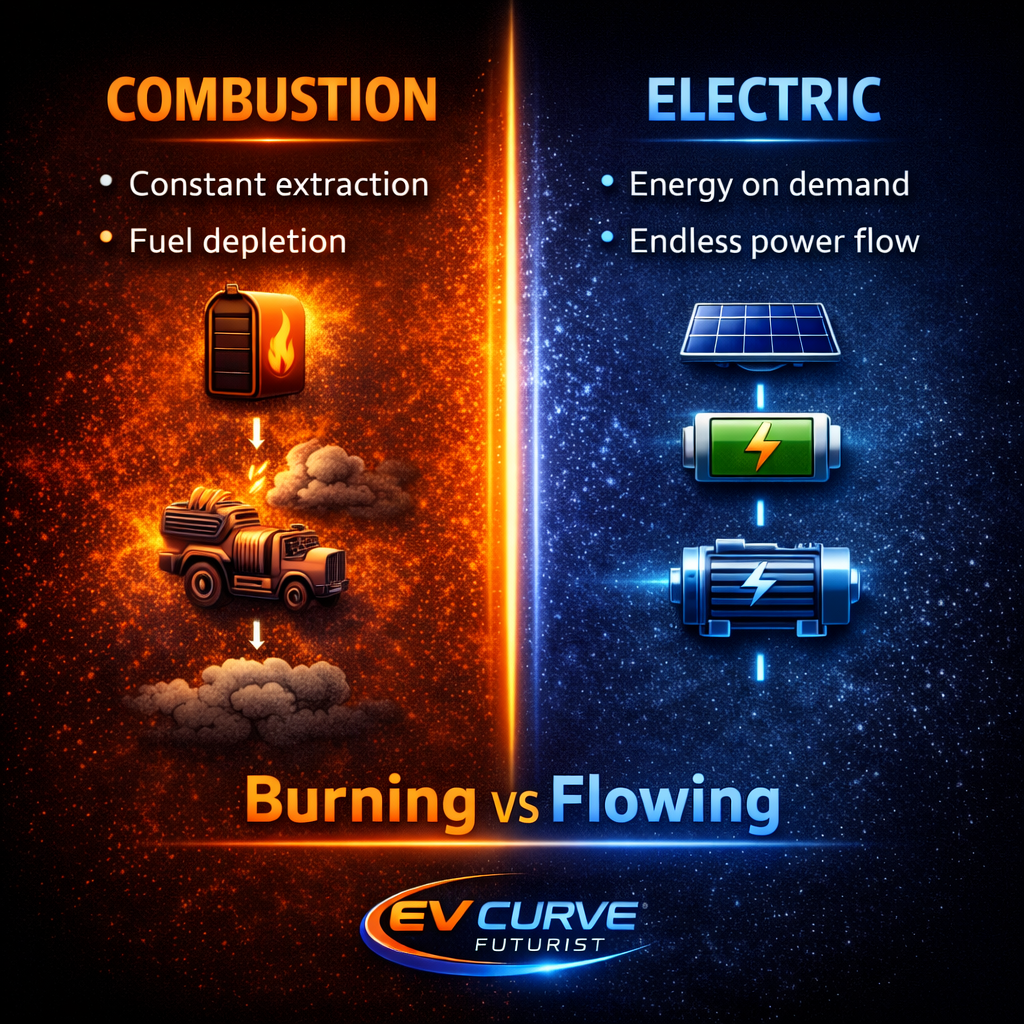
Oil follows a very specific industrial chain:
exploration → drilling → extraction → transport → refining → combustion
Nearly 90% of oil is ultimately burned for energy.
That combustion step is precisely what electrification eliminates.
Electric vehicles, electric rail, heat pumps and electric industry remove the largest use case for petroleum: burning it.
Once that demand disappears, the entire system begins to contract.
The remaining argument: energy density
The last defence of oil is always the same: aviation.
Jet fuel is extremely energy dense, and long‑haul flight is one of the most demanding energy applications humanity has ever engineered.
Lithium batteries today typically reach around 250–300 Wh/kg at the cell level, though higher figures — such as ~500 Wh/kg announced for deployment by FAW — are beginning to emerge, pending independent validation. Next-generation chemistries, including solid-state, lithium-metal and lithium-sulfur, are targeting energy densities in the range of 800–1,000 Wh/kg.
As explored in The Global Battery Technology Frontier, progress across chemistries, manufacturing, and system integration is accelerating simultaneously — making energy density improvements part of a broader technological convergence rather than a single linear breakthrough.
But the ~3,000 Wh/kg range often cited as enabling true long‑haul battery aviation is not a trivial step forward. Achieving it requires major advances in electrochemistry, thermal management, safety systems, materials science and manufacturing. Constraints around raw materials, dendrite formation, degradation, and system‑level weight all present real engineering challenges.
In other words, this is not just a smooth curve waiting to unfold.
However, energy density is still a technological parameter, not a law of nature fixed forever. Aviation itself evolved through multiple fuel transitions — from coal‑derived fuels to kerosene, from piston engines to turbofans. Whether through ultra‑high‑density batteries, synthetic fuels, hydrogen, or hybrid architectures, the sector will likely see several competing technological pathways before the final solution emerges.
The important point is not that aviation electrifies tomorrow — but that even the hardest sectors are no longer constrained to a single energy option.
Could plastics exist without oil?
Yes — but the transition is far more complex than simply swapping feedstocks.
Petrochemicals are hydrocarbons assembled into polymers, and those hydrocarbons can theoretically come from many sources:
• biomass
• waste carbon
• captured atmospheric CO₂
• synthetic chemistry
However, the scale of today’s petrochemical industry is enormous. Plastics production alone exceeds 400 million tonnes per year. Replacing that entirely with biomass would raise serious land‑use questions and could compete with food systems. Capturing enough atmospheric CO₂ to supply polymer feedstocks is technically possible but currently energy‑intensive and expensive.
A realistic transition will likely combine several pathways simultaneously.
Recycling becomes the largest carbon source as circular systems mature. Biomass contributes targeted feedstocks where it is most efficient. Synthetic carbon from captured CO₂ fills gaps where high‑purity hydrocarbons are required.
The circular plastics economy often discussed is therefore not a single solution but a layered system — chemistry, logistics, materials science and policy all evolving together.
Oil again becomes optional, but replacing it at scale is an industrial transformation in its own right.
The forgotten niche: lubrication
One final role of oil is often overlooked in discussions about the end of petroleum: lubrication.
Modern machines depend on lubricants to reduce friction and wear. Historically many of these fluids were derived from petroleum, but they do not have to be.
Synthetic lubricants, bio‑based oils derived from plant sources, and advanced engineered fluids are already widely used in aviation, manufacturing and high‑performance machinery. These alternatives can be produced from biological feedstocks, synthetic chemistry, or recycled hydrocarbons.
This sector is small compared with fuels and petrochemicals, but acknowledging it closes the last practical loophole. Even here, oil is not a necessity — merely one convenient historical source.
The trajectory
The shift is not only technological. It is economic.
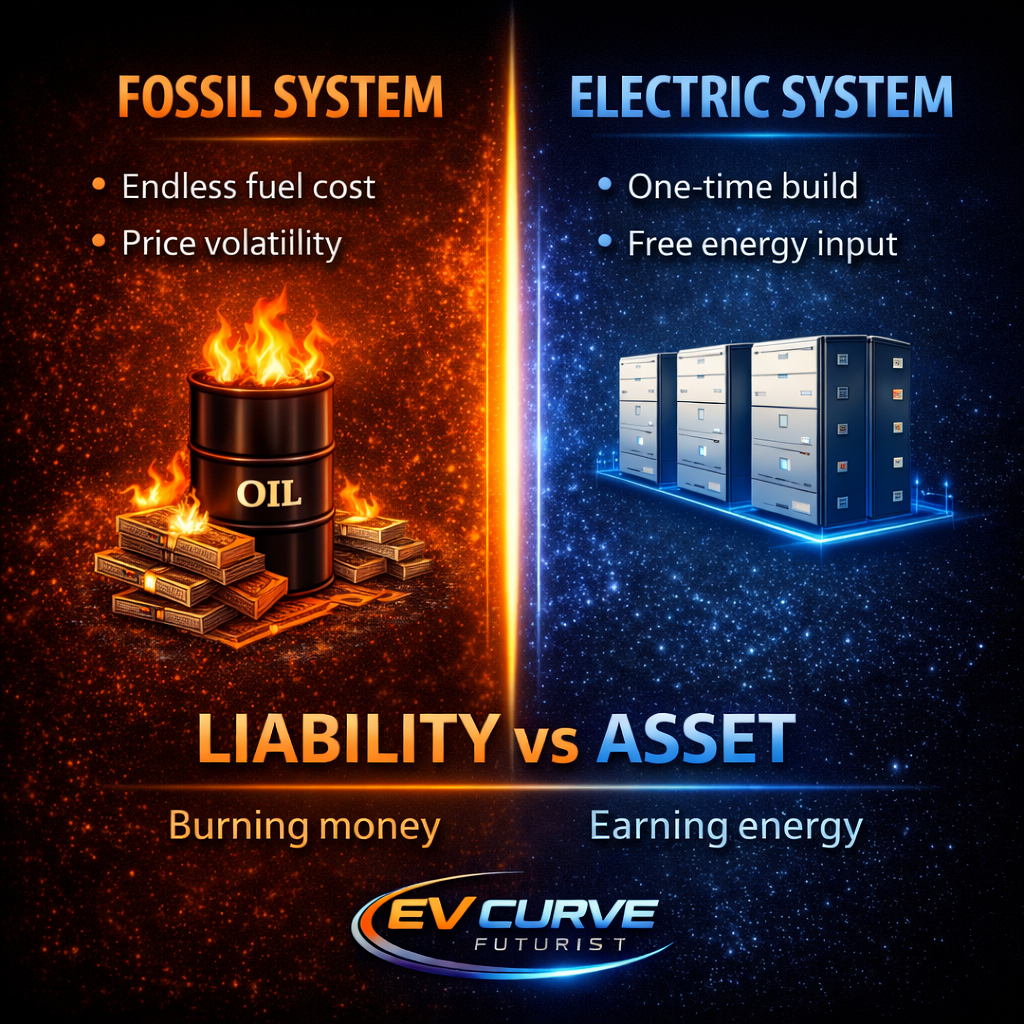
Civilisations rarely eliminate resources instantly.
They replace the dominant function first. Coal once powered ships, trains, heating, and industry. Today it survives mainly in electricity generation. Oil may follow a similar path.
First transport electrifies. Then industry. Then synthetic carbon replaces fossil carbon.
But there is another challenge: the physical world itself was built around oil — suburbs designed for cars, global logistics networks built around diesel trucking and container shipping, and agricultural systems dependent on petrochemical fertilisers and machinery.
Transitioning away from oil therefore means more than replacing a fuel. It requires gradually redesigning infrastructure, supply chains, and urban systems that were optimised for cheap liquid hydrocarbons. This inertia is real, and it slows transitions. Physical systems take decades to evolve.
Yet once new technologies become cheaper and more efficient, those same systems eventually reorganise around them — just as cities reorganised around automobiles in the 20th century. Each step shrinks oil’s relevance while the built environment slowly adapts to a new energy foundation.
So is a world without oil possible?
Technically: yes.
Not because we will run out of oil.
But because we are steadily replacing every function it performs.
Energy → electricity
Mobility → electrification
Carbon feedstocks → biology, recycling, captured CO₂
Oil was a shortcut.
Technology is now finding alternatives to every step in that shortcut.
The psychological barrier
The biggest obstacle to a world without oil is no longer technological. It’s psychological.
For more than a century, the oil industry has embedded a powerful narrative into public consciousness: that petroleum is an indispensable pillar of human survival. That without oil, civilisation collapses. That modern life simply cannot exist without it. But this belief is not physics. It is industrial mythology.
Human civilisation existed for thousands of years before petroleum. We built cities, agriculture, trade networks, ships, metals, textiles, and complex economies long before the first oil well was drilled in 1859.
Oil accelerated industrial development. But acceleration is not the same as necessity. Today, we are discovering that nearly every function oil performs can be replaced — by electricity, by biology, by synthetic chemistry, by recycling, and by entirely new materials.
The idea that civilisation needs oil is not a scientific conclusion. It is a story that benefited the industry that sells it. And like many stories built around dominant technologies, it persists long after the technology itself begins to lose relevance.
History is full of examples. People once believed societies could not function without whale oil for lighting, or horses for transport, or coal for industry. Each of those assumptions eventually proved wrong.
Oil may simply be the next chapter in that pattern. The world did not evolve to depend on oil — it simply used the best tool available at the time. And humanity has always replaced tools once better ones arrive.
Ancient sunlight
The oil age was never really about oil. It was about stored sunlight.
Petroleum is simply ancient solar energy — captured by plants hundreds of millions of years ago, buried underground, compressed by geology, and extracted by humans.
For most of industrial history, this was the only practical way to access large amounts of stored energy. We burned the past to power the present.
But modern technology changes that equation. Solar panels capture sunlight directly. Batteries store it. Electric machines use it with extraordinary efficiency. For the first time in human history, we can run civilisation on current sunlight instead of ancient sunlight.
Seen this way, the energy transition is not just replacing fuels. It is civilisation learning to bypass a geological storage system that took hundreds of millions of years to create.
Oil was never the goal. It was the middleman.
Civilisation is learning to run on today’s sunlight instead of yesterday’s geology. Oil didn’t build civilisation. It just accelerated it. And now civilisation is moving on.
Related articles