
Ethiopia’s Leapfrog: Skipping the Oil Age
With a US$3.6 billion fuel-import bill, abundant renewable electricity and most of its future vehicle fleet still unbuilt, Ethiopia is leapfrogging the petroleum-powered development path followed by wealthier nations. Ethiopia spends roughly US$3.6 billion a year importing fuel, almost as … Continued
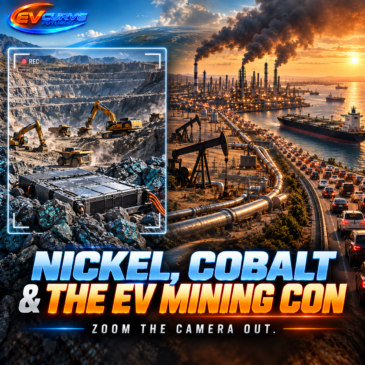
Nickel, Cobalt & the EV Mining Con
I first wrote about this subject in April 2025, after Liam Bartlett’s Electric Vehicle Con put the environmental damage associated with Indonesia’s nickel industry under the spotlight. More recently, a discussion about cobalt mining in the Democratic Republic of Congo … Continued

The Global Robotaxi Race
Different companies. Different approaches. One autonomous future. By now, most of you will have seen the media coverage surrounding Tesla’s Cybercab launch: a purpose-built robotaxi with no steering wheel and no pedals, already carrying passengers autonomously in Texas and expanding … Continued
The Great Data Centre Debate
6 questions about AI, energy and our future This essay is told largely from an Australian perspective, but the questions are global. Countries around the world are grappling with the same dilemma: how do we capture the enormous potential of … Continued
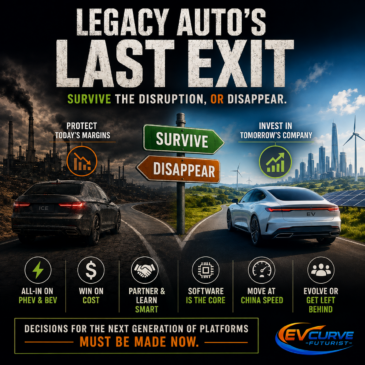
How Legacy Auto Could Save Itself, But Probably Won’t
Ford, Toyota and Volkswagen still have time to survive the Chinese EV disruption. The problem is that survival requires them to dismantle much of the business that made them successful. I keep coming back to one uncomfortable thought: legacy auto … Continued
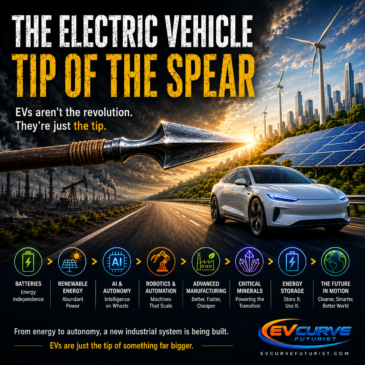
The Electric Vehicle – Tip of the Spear
My wife is sick to death of hearing me talk about electric cars. A few of my friends probably are too. And I can’t really blame them. If you spend enough time around me, you’d be forgiven for thinking I’m … Continued
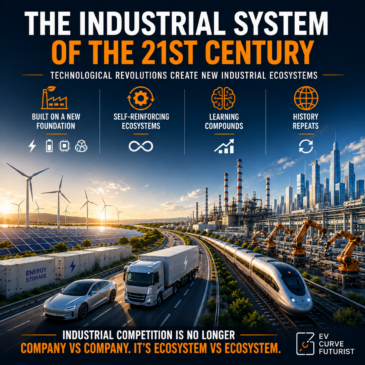
The Industrial System of the 21st Century
How technological revolutions create entirely new industrial ecosystems. The more I think about it, the more I believe we’ve been asking the wrong question. The challenge facing much of the West isn’t simply that China makes cheaper cars. Nor is … Continued
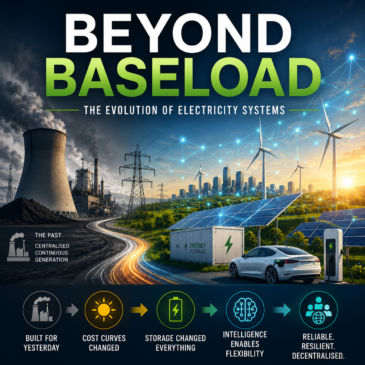
Beyond Baseload: The Evolution of Energy Grids
The term “baseload power” gets thrown around a lot in debates over the future of energy. But where did this concept come from, and does it still matter in an age defined by solar panels, wind turbines, batteries, artificial intelligence … Continued
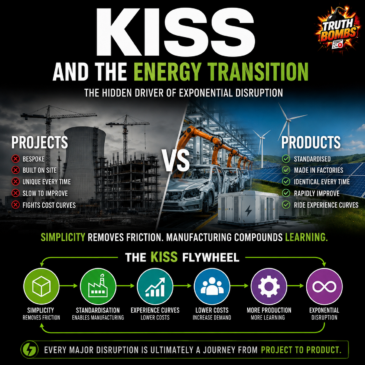
KISS and the Energy Transition: The Hidden Driver of Exponential Disruption
Engineers have long followed one principle: KISS: Keep It Simple, Stupid. Simpler systems are usually more reliable, cheaper to manufacture, easier to maintain and faster to improve. I think that same principle also explains why some technologies scale exponentially while … Continued

The Fossil Fuel Welfare State
Why the world’s oldest energy industry still receives more support than its replacement This article began with a comment beneath a post I wrote about IKEA’s renewable energy investments. The post highlighted how IKEA has installed more than a million … Continued