

Updated May 2026 with refined visuals, clearer examples, and expanded analysis.
The energy transition is easier than it looks
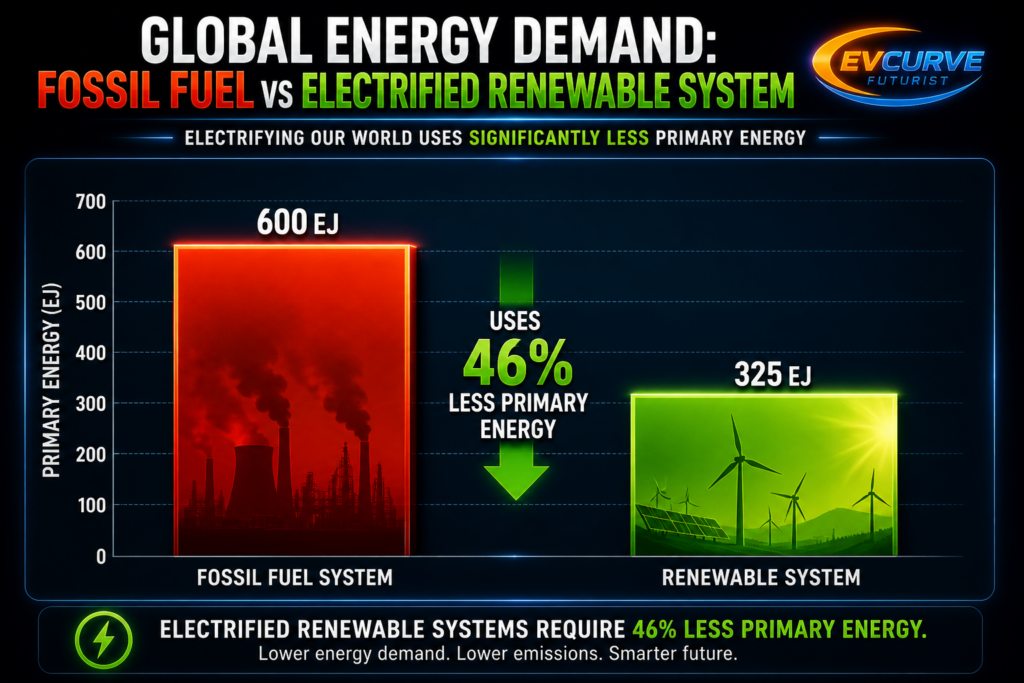
Caption: Electrification reduces total energy demand by cutting systemic inefficiencies, not by replacing energy 1:1.
We keep hearing the same argument. The world uses roughly 600 exajoules of energy today, mostly from fossil fuels. Therefore, to transition, we need to replace all of it with clean energy.
Sounds logical. It is wrong.
In reality, that 600 EJ does not carry forward one for one. Under electrification, that same level of services typically translates to roughly 300 to 350 EJ of electricity, because most of the current system is waste.
This is the primary energy fallacy. It assumes that all energy is equal, and that the amount we extract is the same as the amount we actually use. It is not.
The Hidden Problem
Primary energy measures how much energy we extract from the ground. It does not measure how much of that energy actually does useful work.
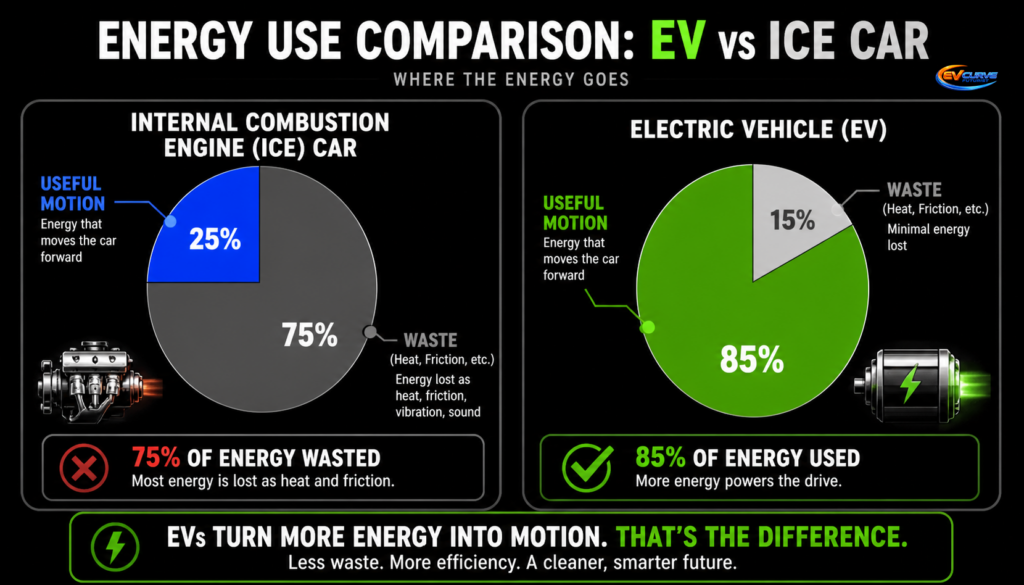
Caption: Electric drivetrains convert energy into motion far more efficiently than combustion engines.
In fossil systems, most of it does not. When you burn coal, oil, or gas, a large portion of that energy is lost as heat before it ever reaches the end user. Engines, power plants, and industrial processes all waste energy as part of how they operate.
So when we say the world uses 600 EJ, what we are really saying is that we waste a massive amount of energy just to deliver the services we actually need. Around two thirds of primary energy is lost as waste heat.
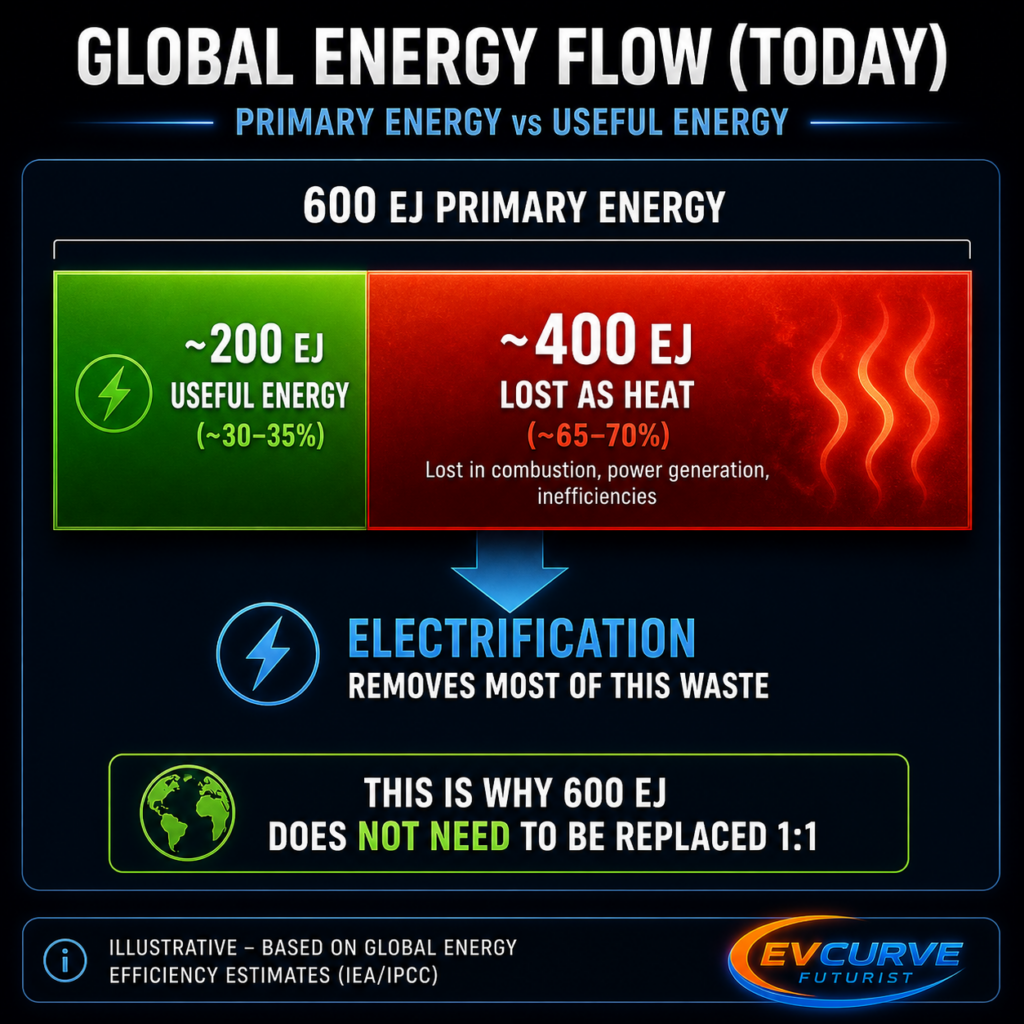
Caption: Around two thirds of primary energy is lost before it does useful work. Electrification removes most of this systemic waste.
Efficiency Reset
The difference comes down to one thing, efficiency. Internal combustion engines convert roughly 20 to 30 percent of energy into motion, with the rest lost as heat. Electric drivetrains operate at around 75 to 90 percent efficiency, and heat pumps go further by delivering two to four units of heat for every unit of energy consumed.
This is not a marginal improvement. It is a step change.
Here is what that looks like in real terms. A fossil car uses about 100 kWh of primary energy to deliver roughly 25 kWh at the wheels. An EV uses around 30 kWh of primary energy to deliver the same 25 kWh at the wheels. The outcome is identical, but the energy input is roughly one third.
Across transport, heating, and large parts of industry, electrification reduces the amount of energy required to deliver the same outcome. System wide energy demand does not stay flat. It falls.
Transport sees roughly a threefold efficiency gain, while heating improves by a factor of two to four. In most credible scenarios, total primary energy demand drops by roughly 40 to 50 percent under full electrification. This is consistent with pathways from the IEA Net Zero scenario and IPCC assessments, which show large reductions in primary energy as systems electrify and efficiency improves.
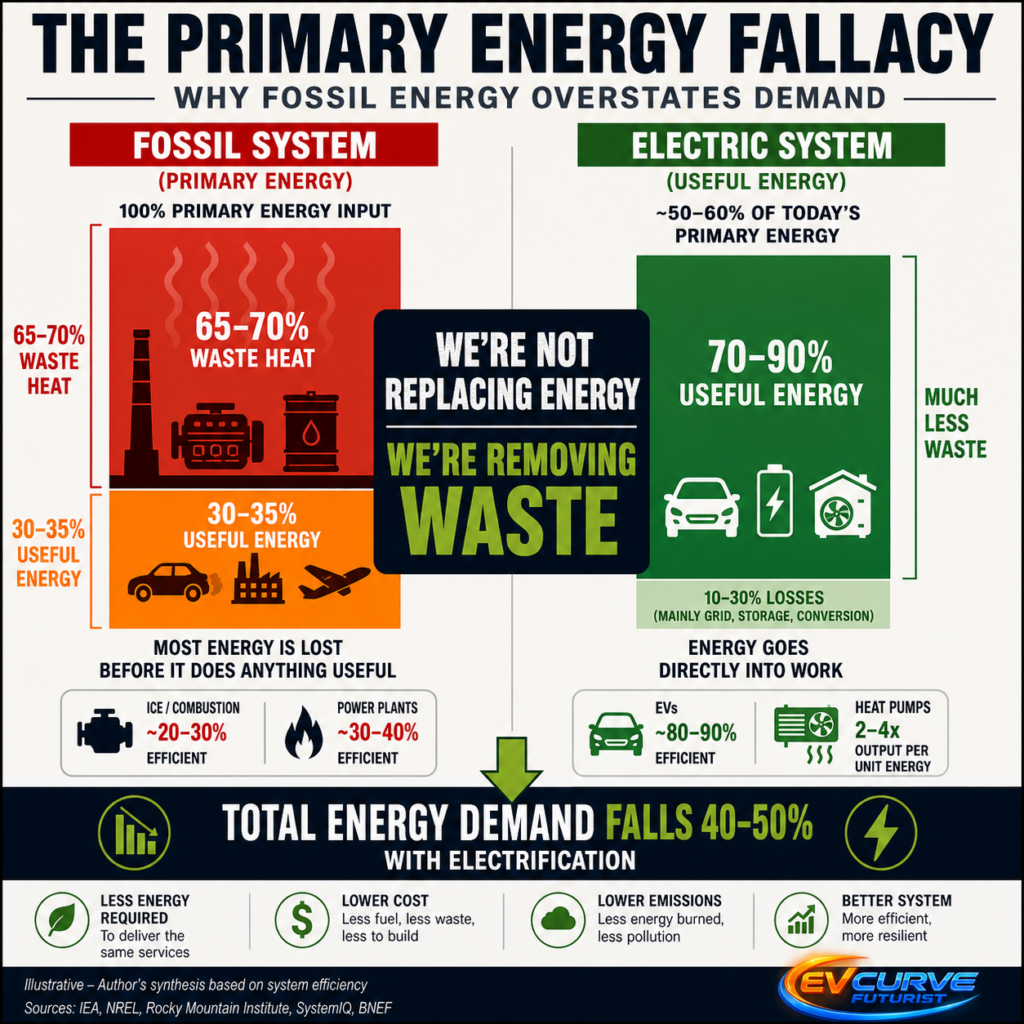
Caption: Fossil systems waste most energy as heat. Electric systems deliver energy directly into useful work.
System Boundaries
Electrification does not eliminate system costs. Grids, storage, transmission, and infrastructure still need to be built and scaled.
But that does not change the core equation. You are replacing a system that wastes most of its energy with one that delivers it directly. Even after accounting for storage losses and grid expansion, the efficiency advantage remains overwhelming. The system does not just get cleaner. It gets leaner.
Variability and storage do add overhead, often on the order of 20 to 30 percent in system energy needs. However, that is dwarfed by the two to threefold efficiency gains from electrification. The net direction does not change.
Why Primary Energy Persists
So why do we still use primary energy as the default metric? Because it was built for a fossil system. It made sense when most energy was extracted, burned, and lost in the process, and measuring total input gave a rough picture of system scale.
That logic breaks down in an electric system. When energy is converted efficiently and used directly, primary energy starts overstating what we actually need. The metric is not wrong, but it belongs to a system we are leaving behind.
It is also worth noting that nuclear is measured in primary energy terms based on thermal input and operates at roughly 33 percent efficiency. This is rarely used as an argument against nuclear. The issue here is not low efficiency alone, but the combination of low efficiency and widespread combustion, where most energy is lost before it does useful work. That is what electrification replaces.
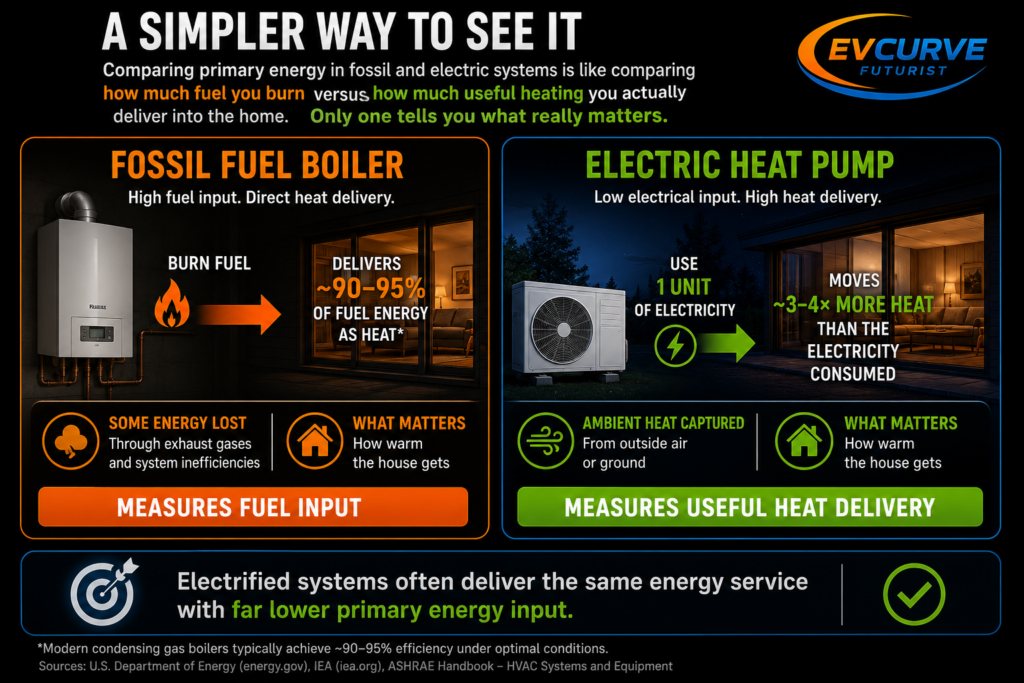
A Simpler Way to See It
Comparing primary energy in fossil and electric systems is like comparing how much wood you burn to heat a house versus how warm the house actually gets. One measures input, the other measures outcome. Only one tells you what really matters.
Common Misunderstanding
A common pushback is that renewables require additional energy due to variability, storage, and grid balancing. That is true to a point, but it does not overturn the core advantage.
Even after accounting for storage losses, transmission, and system build out, electric systems still require far less total energy than combustion based ones. Some overhead is added, but massive systemic waste is removed. The net effect is still a significant reduction in total energy demand.
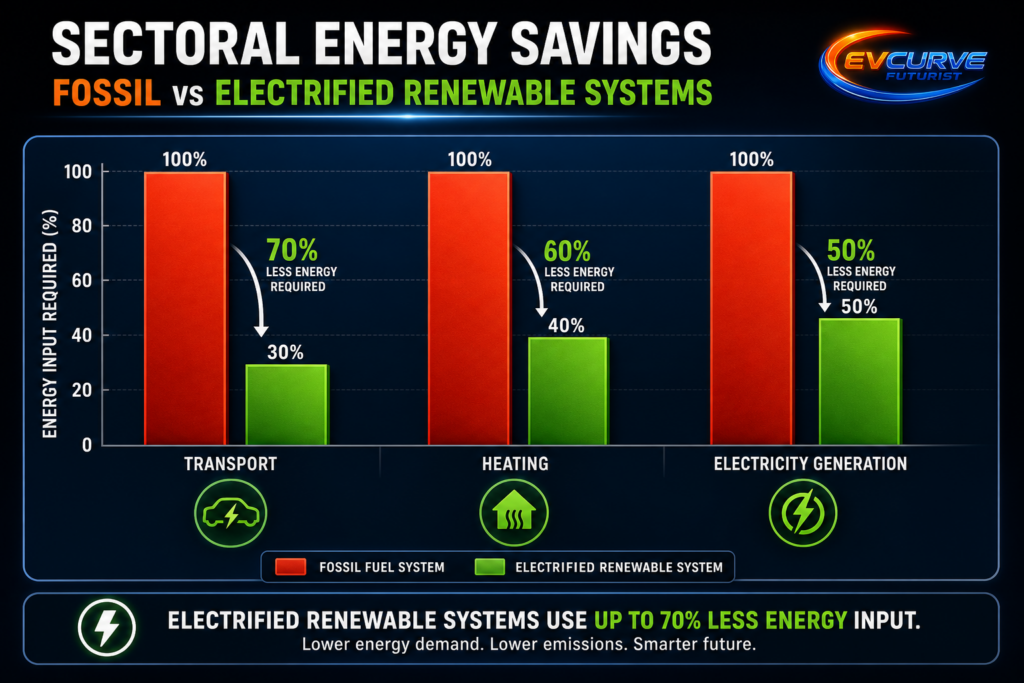
Caption: Efficiency gains across transport, heating, and electricity drive the collapse in total energy demand.
The Real Shift
This is why so many energy forecasts overestimate the scale of the challenge. They are measuring the wrong thing, not how much energy we actually need to deliver services, but how much energy the current system wastes getting there.
Electrification does not just change the source of energy. It changes how much energy is required in the first place. We are not replacing 600 EJ. We are removing waste.
Conclusion
While it is true that electrifying transport and heating will increase our electricity demand, it is just as crucial to understand the efficiency equation. Replacing combustion engines (vehicles), gas boilers (heating), and industrial furnaces with electric alternatives means slashing waste. We are not powering the same system, we are building a fundamentally leaner one.
The energy transition is about doing things smarter, not just swapping fuels. By cutting waste and maximizing efficiency, electrification delivers the same energy services with far less input. The primary energy fallacy clouds this truth, but once we see through it, the path forward becomes clearer, shorter, cheaper, and entirely achievable.
Credits & Further Reading
This blog builds on the more technical explanation by Sam Hamels and reinforces the concept of the Primary Energy Fallacy, a term originally coined by Michael Liebreich.
By combining rigorous insight with practical framing, we can make this misunderstood issue more accessible and help fast track the clean energy transition.