

Engineers have long followed one principle:
KISS: Keep It Simple, Stupid.
Simpler systems are usually more reliable, cheaper to manufacture, easier to maintain and faster to improve. I think that same principle also explains why some technologies scale exponentially while others spend decades struggling to gain traction.
The reason is friction.
By friction, I mean anything that slows scale: specialised labour, custom engineering, regulation, permitting, construction or complex supply chains. Every additional layer slows learning, delays cost reductions and ultimately slows adoption. Once a technology has solved its core scientific challenge, complexity often stops being an advantage and becomes a bottleneck.
The KISS Flywheel
Every technology sits somewhere on a spectrum between simple and complex. Simplicity removes friction. Less friction enables standardised products. Standardisation enables manufacturing. Manufacturing creates experience curves. Experience curves lower costs. Lower costs increase demand. Higher demand drives more production, creating even more learning. The flywheel spins faster with every cycle.
Eventually, exponential learning becomes exponential disruption.
The KISS Framework #1

Figure 1. Simplicity removes friction. Manufacturing compounds learning. Learning drives exponential disruption.
Products vs Projects
The real divide isn’t hardware versus software or digital versus physical.
It’s products versus projects.
Products are manufactured millions of times. Projects are rebuilt every time. That difference changes everything. Every identical product teaches manufacturers how to build the next one faster, cheaper and better, while every project introduces new engineering, approvals and site-specific constraints.
Factories accumulate learning. Construction sites largely accumulate experience.
Products improve through repetition. Projects improve in spite of repetition.
That’s why products ride experience curves while projects tend to fight cost curves.
The KISS Framework #2
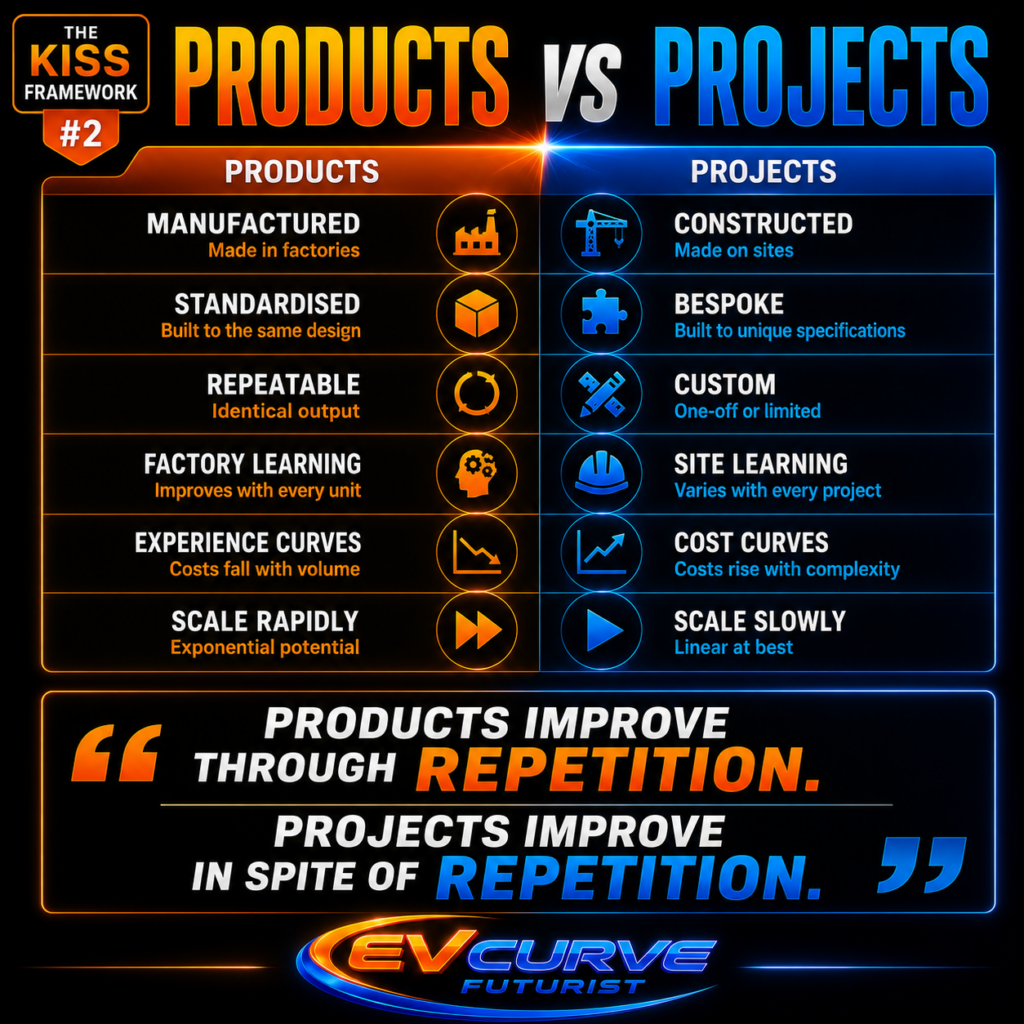
Figure 2. Products compound through repetition. Projects rarely do.
Experience Curves Create Flywheels
Manufacturing creates one of the most powerful forces in economics. Lower costs increase demand, demand increases production, production accelerates learning and learning lowers costs again. Every turn of the flywheel makes the next one easier.
Software follows the same pattern. Once written, it can be replicated almost infinitely at near-zero cost. Physical products behave similarly once manufacturing becomes sufficiently standardised. Experience curves aren’t magic. They’re simply what happens when millions of nearly identical products are built, measured and improved.
KISS in the Energy Transition
The modern energy transition may be the clearest example we’ve ever seen.
Solar panels, Battery Energy Storage Systems (BESS), electric vehicles and wind turbines are all fundamentally repeatable products. Solar farms are assembled from identical panels, battery storage systems from standardised containers, EVs roll off automated production lines, and wind turbines are built from repeatable factory-made components. Different products, same manufacturing logic.
Contrast that with conventional nuclear plants, hydrogen energy systems or large fossil-fuel power stations. These remain heavily dependent on bespoke engineering, lengthy permitting, site-specific construction and complex supply chains. They improve too, but much more slowly because every deployment introduces new friction.
Solar module prices have fallen roughly 99% since the 1970s. Lithium-ion battery pack prices have fallen around 90% since 2010, according to BloombergNEF. The underlying physics didn’t improve by 99%.
Manufacturing did.
The KISS Framework #3
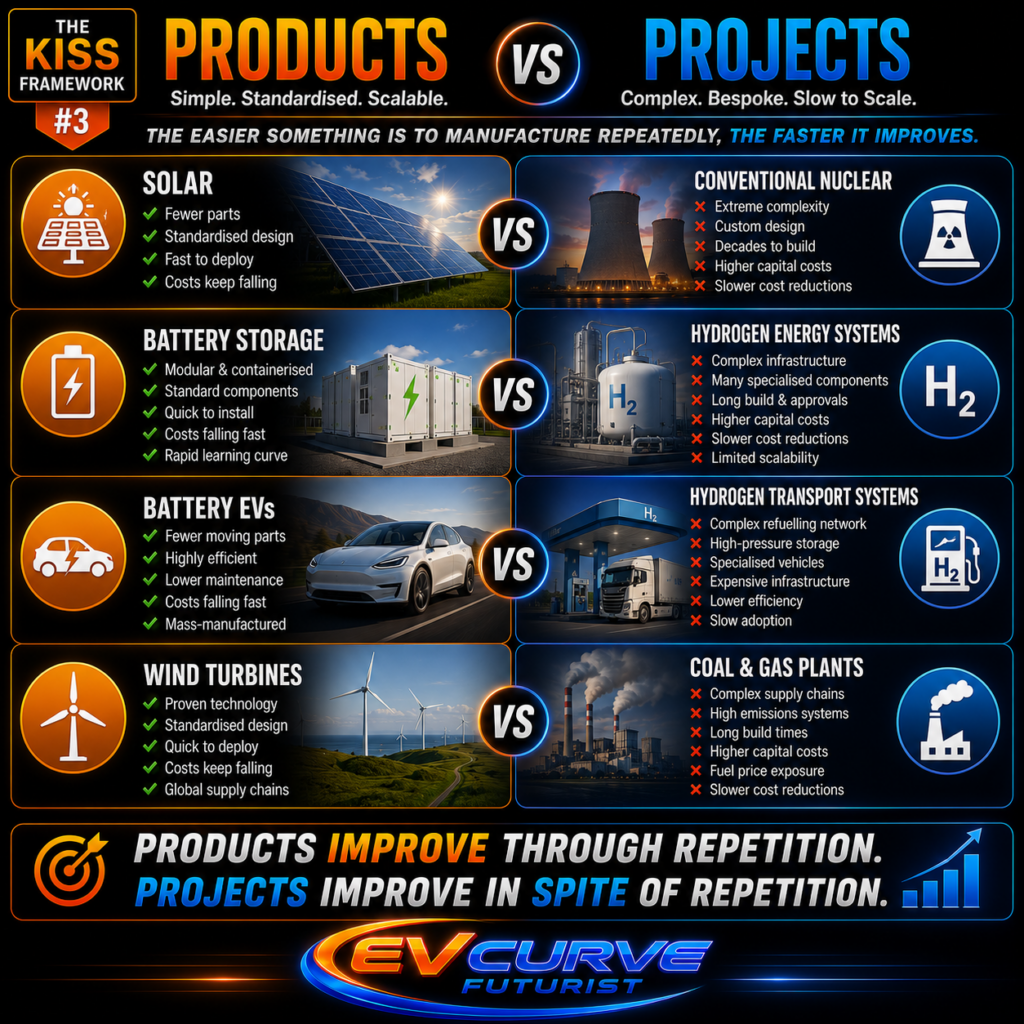
Figure 3. The easier something is to manufacture repeatedly, the faster it improves.
Discovery Solves Science. Deployment Solves Manufacturing.
None of this means complexity is bad.
Scientific discovery often demands extraordinary complexity. The first nuclear reactors, the Apollo Guidance Computer and today’s frontier AI models all prove that. Discovery rewards complexity. Deployment rewards simplicity.
Once the science works, the challenge changes from solving physics to solving manufacturing.
Hydrogen illustrates the principle well. Producing, compressing or liquefying, transporting, storing and converting hydrogen back into useful energy introduces friction at almost every step. Battery-electric systems bypass much of that complexity because electrons travel through wires rather than pipelines, compressors and specialised transport.
Small Modular Reactors face a similar challenge. Their future depends less on reactor physics than on whether they genuinely transform nuclear from a construction project into a manufactured product. If they do, they could unlock the same manufacturing flywheels that have driven solar, batteries and EVs. If they don’t, they’ll remain constrained by project economics.
Every major disruption eventually follows the same journey:
Project → Product.
Tesla Started It. China Scaled It.
Tesla recognised something the automotive industry largely missed: manufacturing itself could become the innovation. Gigacasting, structural battery packs, simplified wiring, software-defined vehicles and factories designed around manufacturability dramatically reduced friction. The factory became the product.
China then industrialised that philosophy across entire industries. Companies like BYD, Geely, Xpeng, CATL, Sungrow and Huawei didn’t simply build better products. They built manufacturing ecosystems where every new factory accelerated learning across batteries, solar panels, EVs, power electronics and energy storage simultaneously.
Scale accelerated learning. Learning accelerated cost reductions. Lower costs expanded markets. Larger markets justified more factories. The flywheel spun faster.
Innovation started the transition.
Industrial scale accelerated it.
The KISS Framework #5
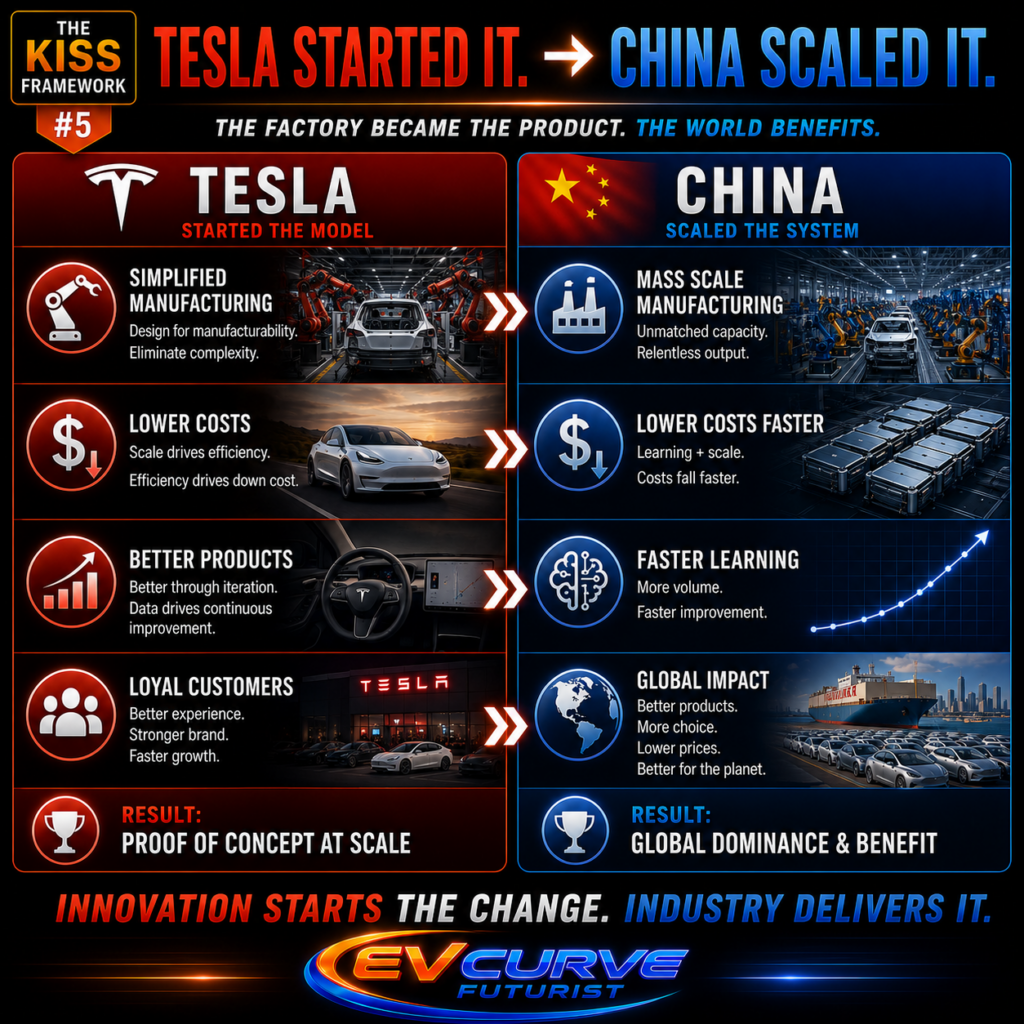
Figure 4. Tesla demonstrated that manufacturing itself could become the innovation. China industrialised that model across entire industries, creating powerful learning flywheels.
Experience Curves Become S-Curves
Experience curves don’t just lower costs, they reshape adoption. As products become cheaper and better, markets expand, investment accelerates and deployment compounds, pushing technologies from slow adoption into the steep middle of the S-curve before eventually reaching maturity.
Solar is a textbook example. It spent decades in the shallow part of the curve before manufacturing reached sufficient scale. Since then, deployment has accelerated dramatically. Batteries are now following the same trajectory.
The physics changed relatively little.
Manufacturing changed everything.
The KISS Framework #4
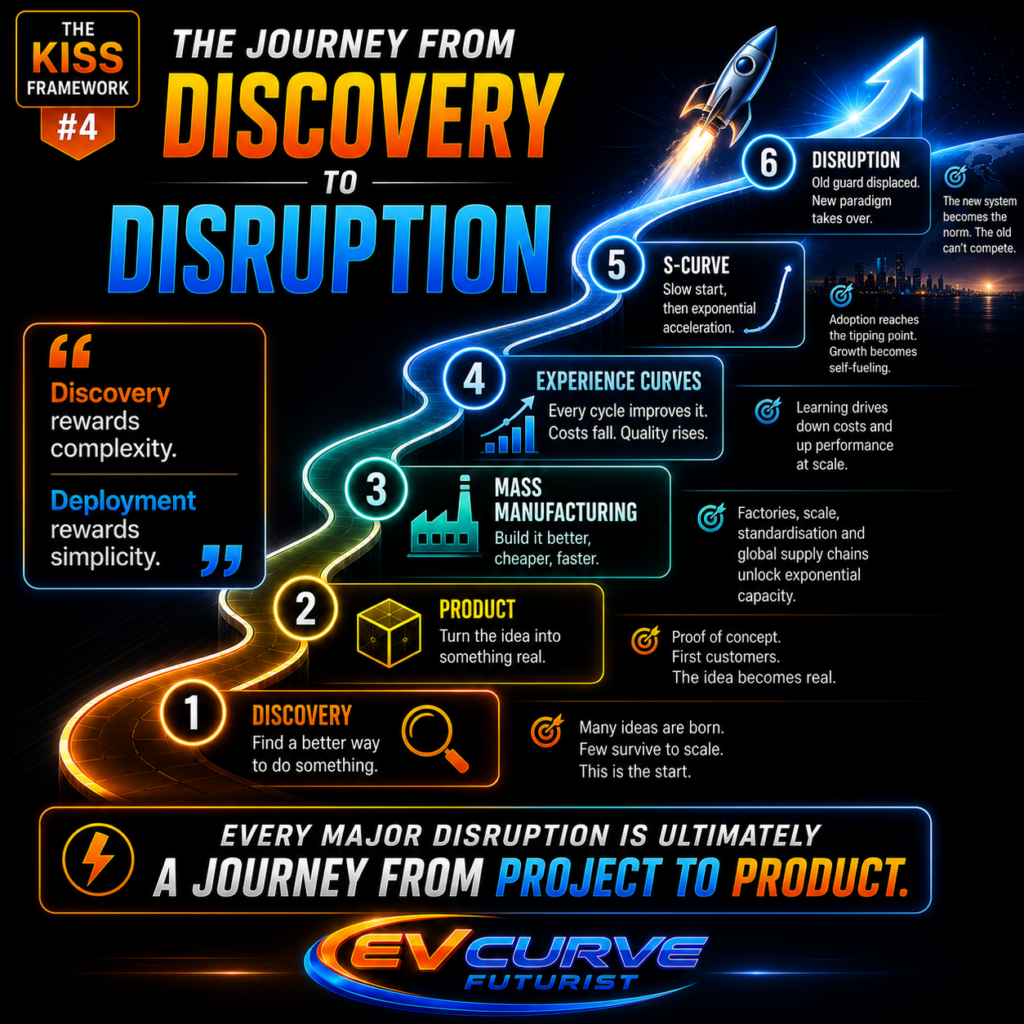
Figure 5. Discovery creates possibility. Manufacturing unlocks experience curves. Experience curves create S-curves. S-curves create disruption.
A Simple Test
The next time you evaluate an emerging technology, don’t begin by asking:
How advanced is it?
Ask instead:
Can it become a product?
Can millions of identical units eventually roll off production lines, or will every deployment remain a bespoke engineering project?
That single question reveals an enormous amount about how quickly learning can compound, costs can fall and adoption can accelerate.
KISS isn’t just an engineering principle. It’s also an investment framework and an industrial strategy for understanding technological disruption.
The technologies that reshape industries aren’t always the most technically sophisticated. They’re the ones that remove the most friction, become products rather than projects and improve through repetition.
Every major disruption is ultimately a journey from project to product.
KISS.
References
- Wright, T. P. (1936). Factors Affecting the Cost of Airplanes
- Boston Consulting Group – Perspectives on the Experience Curve
- BloombergNEF – Battery Price Survey
- International Energy Agency – Global EV Outlook
- International Energy Agency – Renewables
- Our World in Data – Solar PV Costs and Learning Curves
- Lazard – Levelized Cost of Energy (LCOE)
